Orders taken at the table appear on the kitchen screen, dishes are costed against the raw material that went into them, wastage is written down, and a chain gets one view across every outlet.
Running behind the counters of a reputed south Indian restaurant chain as its inventory and analytics system.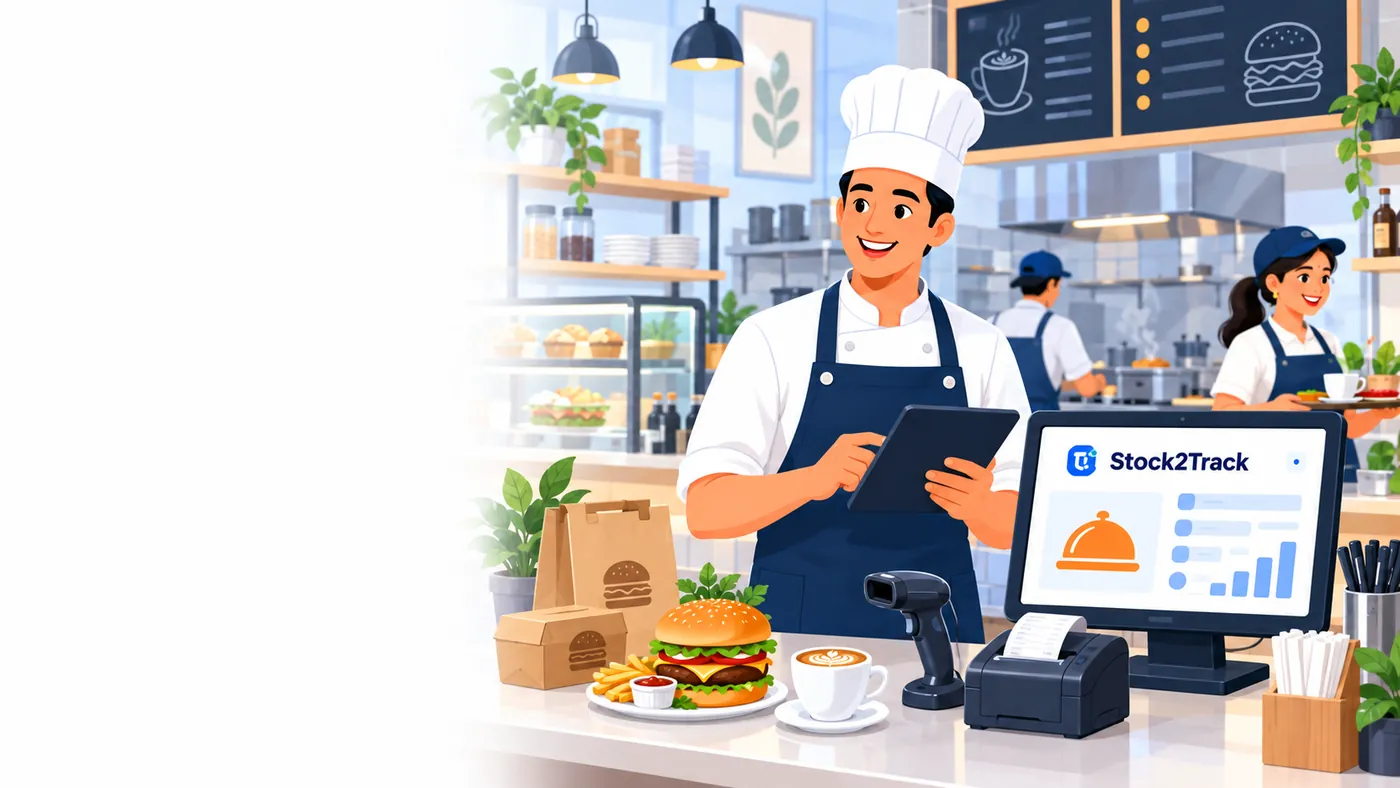
Every other trade sells the thing it purchased. A kitchen buys rice, oil and vegetables and sells a plate, which is why ordinary billing software cannot tell a restaurant owner anything useful about cost.
Tables are laid out, orders run against them through the evening, and bookings are taken for a date and time with the party size and the table held against them.
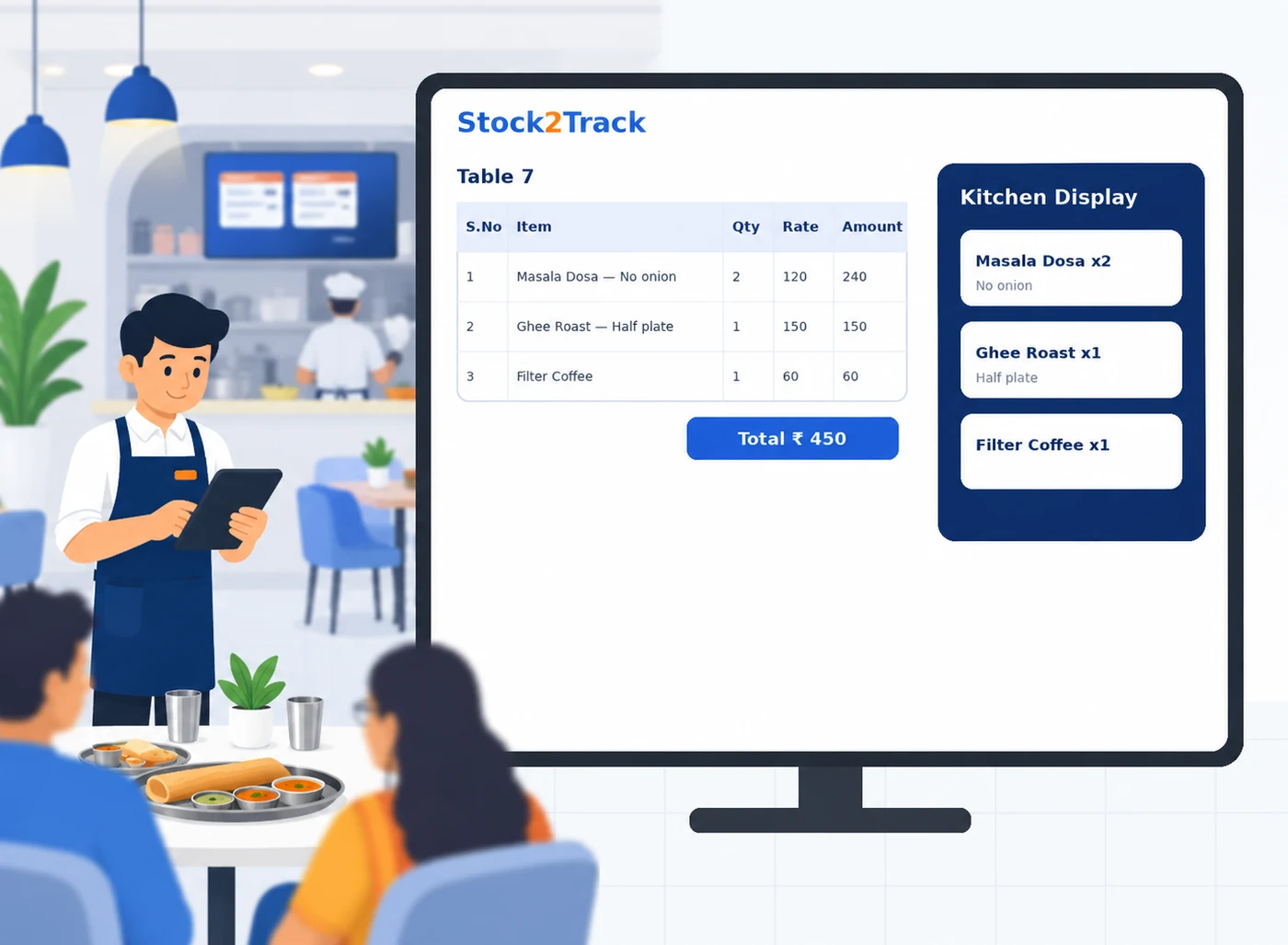
The order goes from the table to a kitchen display, so nothing depends on a slip being carried to the pass or read correctly when it gets there.
Modifiers are set up per dish and picked at the table, so the way a customer wants it reaches the kitchen as part of the order rather than as a shouted instruction.
Record what goes into a dish and the stock comes off the raw material, so the cost of a plate is worked out from what it consumed instead of estimated once a year.
A wastage log records what was thrown away and why, so the gap between what was bought and what was sold has an explanation rather than a shrug.
Branch transfers, automatic ordering against reorder levels, per-outlet cost analysis and cash-flow analytics, with each counter still billing its own customers.
The same order does three jobs: it feeds the customer, it moves the stock, and it tells you what the plate cost.
Someone goes back for two more things. Park their bill, bill the person behind them, then pick the first one up again. Nobody queues behind a half-finished sale.
Decide what each person and each department can open. A cashier bills without being able to edit a price, change stock or see the margin on a sale.
Keyboard shortcuts, barcode entry and a counter screen that does not make anyone hunt through menus when there are six people waiting.
Power cuts, patchy internet, GST filings and the printer you already own. Stock2Track was designed around them, not adapted later.
Prices exclude GST. Need something this page does not cover? Our own engineers build it for you — see custom development.
Yes. Orders taken at the table appear on the kitchen display, so nothing depends on a slip being carried to the pass.
Yes. Modifiers are set up per dish and chosen when the order is taken, and they travel to the kitchen with the order.
Yes. Record what goes into a dish and the raw material comes off stock as it is made, so the cost of a plate is calculated rather than estimated.
No. A south Indian restaurant chain kept its existing billing at every counter and runs Stock2Track behind it, with invoices imported and the whole chain’s inventory, costing and analytics on Stock2Track. Their case study is linked above.
Yes. A booking is taken for a date, time and party size against a table, and held until the party arrives.
Rs 25,000 one-time for the Offline plan, or Rs 25,000 per year for Cloud, both excluding GST.
Send us a few dishes and what goes into them, and we will show you the order, the kitchen screen and the cost of the plate in 20 minutes.