
When ERP enters the physical store: the rise of robotics ERP
Retail ERP has always recorded what people did. The next generation will watch the physical store through cameras and sensors, understand it, and coordinate people and machines to act. What that means for a shop, and where Stock2Track fits.
For decades, retail software has lived inside the computer. A salesperson scans a barcode, a cashier makes an invoice, a warehouse hand enters a goods receipt, a manager checks stock, somebody raises a purchase order. The ERP records each of these and updates its database. It is a faithful clerk: it knows exactly what people told it, and nothing else.
That is beginning to change. Cameras can count the customers walking in. A weighing station can recognise what is on the pan. A shelf can report that it is empty. A cart can carry cartons from the storeroom without anyone pushing it. A drone can count stock in a warehouse overnight. None of this is science fiction; all of it exists today, at prices that fall every year.
Which raises a question that retail software has never had to answer before:
What happens when the ERP is connected not only to people and computers, but to the machines and sensors operating inside the business?
That is where the idea of robotics ERP begins. And the important part of it is not robots.
The ERP knows the digital shop, not the physical one
Take a supermarket with twenty thousand items. Its ERP knows current stock, purchases, sales, suppliers, margins, expiry dates, customer history, payments, reorder levels and transfers between branches. That is a great deal of knowledge, and it has one blind spot: almost all of it arrives only after somebody performs an action.
The ERP knows ten bottles were received because someone entered the GRN. It knows one bottle was sold because the cashier scanned it. It does not know that three bottles are on the wrong shelf, that a carton is still sitting in the receiving bay, that a shelf has been empty since noon while sixteen units wait in the storeroom, that an item was moved without being scanned, or that staff spend an hour a day looking for things.
The physical store and the digital ERP are still partly disconnected. Sensors, cameras and connected machines are how that gap gradually closes.
First the ERP learns to see
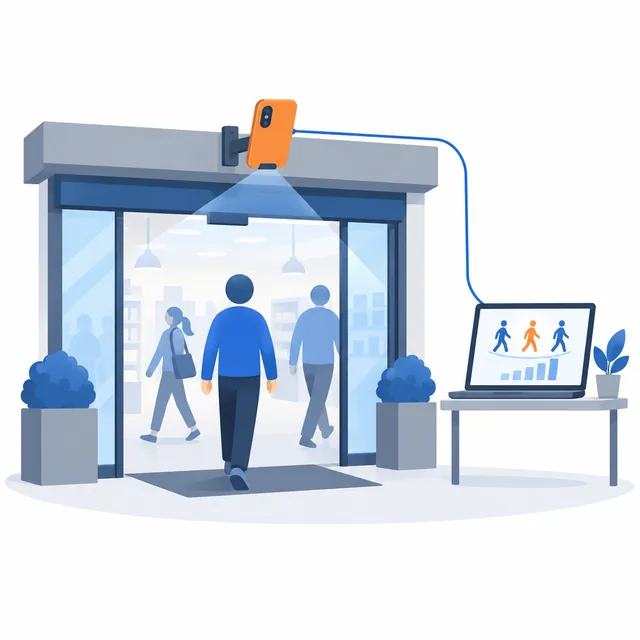
Put a camera at the entrance that counts footfall. The ERP already knows how many invoices were made. Suddenly a chain becomes visible that billing software alone can never show: people entering, people buying, invoices generated, products sold, revenue earned. Now the owner can ask a question that used to be unanswerable:
Why did 420 people walk in yesterday and only 126 bills get made?
That is the first transition, and it is worth naming the stages plainly.
A traditional ERP runs people → software → database. An intelligent ERP runs people + cameras + devices → ERP → intelligence. A robotics ERP runs people + sensors + machines → ERP → decisions → physical action. The last step is the new one. The system is no longer only observing the business; it begins to take part in running it.
When the shelf talks to the ERP
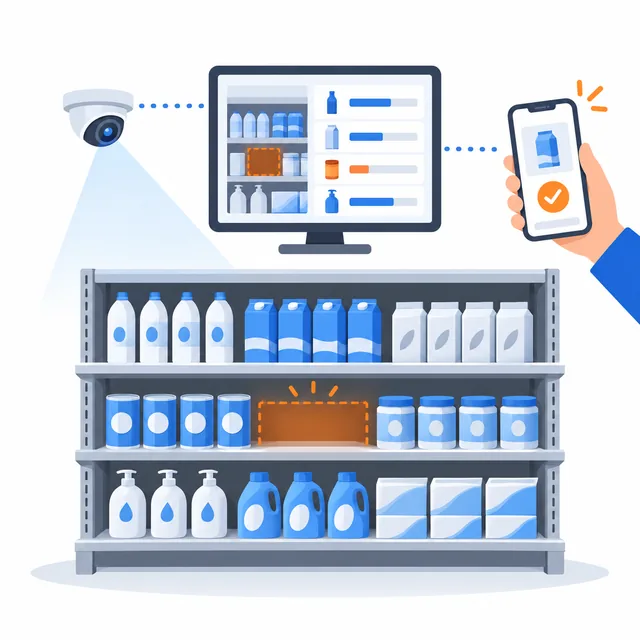
Here is a situation every retailer recognises. The ERP says eighteen units available. The shelf is empty. Today, somebody has to notice, walk to the back, find the stock and refill; until then, every customer who wanted that item leaves without it.
Now imagine a camera or a shelf sensor reports the empty space. The ERP compares: system stock eighteen, shelf stock probably zero, recent sales high, storeroom stock available. Instead of a generic stock report, it creates an action: Replenish shelf 14, product X, eighteen units in the backroom. A staff member's phone receives the task. In a larger store, an autonomous cart could bring the carton to the shop floor itself.
Notice what has happened to the ERP's job. It used to record inventory. Then it learned to understand inventory. Now it is coordinating the movement of inventory. That is a different kind of software.
Robots will mostly not look like robots
Say "robotics" and most people picture a humanoid machine wandering the aisles. That is the wrong picture for retail. The useful machines will be far less dramatic: autonomous warehouse carts, robotic picking and sorting, shelf-scanning trolleys, conveyor systems, smart weighing stations, vision-based checkout, warehouse drones for stock counts, smart lockers, even robotic floor cleaners.
The cheapest of them is already in a drawer somewhere. An old Android phone fixed near the entrance, running a computer-vision app that counts people locally and sends only the result to the ERP, is a camera, an edge computer and a network device in one, at nearly zero cost. We have built exactly that for Stock2Track: an APK that turns a spare phone into a footfall camera whose events land in the same system as the bills.
The shape of the machine does not matter. The question is only whether the device can observe, understand or perform something that matters to the business. If it can, the ERP should be able to talk to it.
The ERP as the control tower
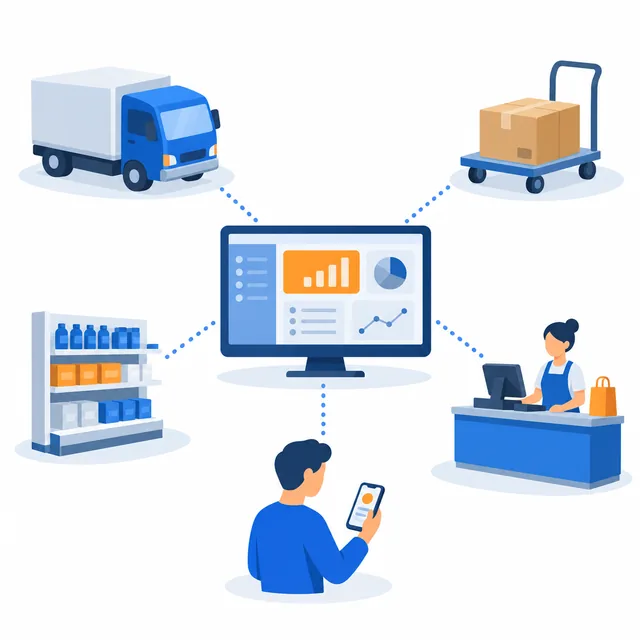
This changes what an ERP is for. Today it is the place where the transactions live. Tomorrow it is the control tower that coordinates the operation.
Consider a distributor receiving three hundred cartons in the morning. The ERP already knows the purchase order is due. A future receiving workflow runs: purchase order, vehicle arrives, camera recognises it, dock assigned, goods unloaded, barcode or vision check, GRN, storage recommendation, cartons moved, stock available for sale. Much of that is physical work, and every step of it depends on information that only the ERP holds.
A warehouse robot knows how to move a carton. It does not know whether the carton belongs to an urgent order, whether the item is fast-moving, whether it must go into quarantine, whether an older batch should be sold first, whether another branch needs the stock more, or whether the supplier has short-shipped. The ERP knows the business context; the machine knows the physical task. Connecting the two is the whole opportunity.
The interesting part is orchestration, not robotics
No retailer wants a robot. They want fewer stockouts, faster replenishment, less money tied up in inventory, fewer picking errors, faster dispatch, less shrinkage, better service and lower operating cost. A machine earns its place only when it moves one of those numbers, and that is why the ERP sits in the middle.
A camera reporting "shelf empty" is of limited use on its own. The ERP adds what turns an observation into a decision: forty-two units sold in the last seven days, sixteen in the backroom, nine more likely to sell before closing, replenish now. If a task system is connected, it creates the task. If a cart is connected, it sends the cart to bay B12 for one carton to shelf 8. That, and nothing more exotic, is robotics ERP.
People stay in the loop
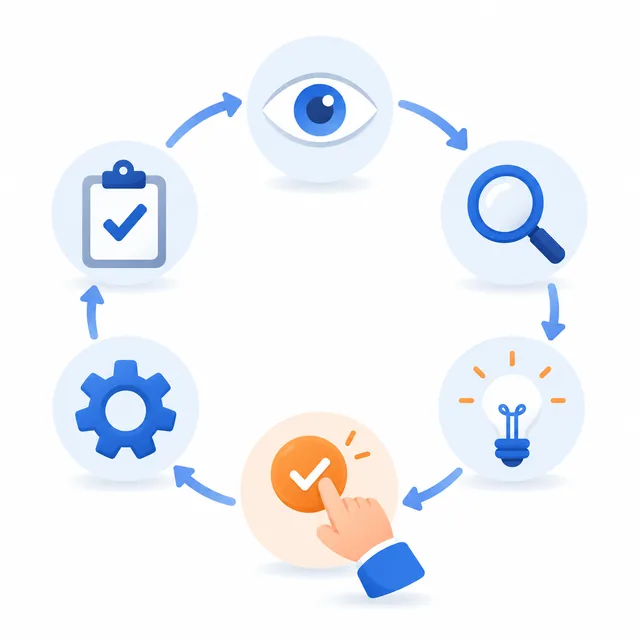
Not every recommendation should fire a machine. Plenty of retail decisions need judgment. The supplier's price is up twelve per cent, demand is slowing and existing stock covers thirty-nine days: do you still want the usual order? The system should recommend; the owner decides; then software, staff or machines carry it out.
The working model for the next generation of retail ERP is a loop with six steps. Observe what is happening. Understand why. Recommend what should happen next. Approve, by the owner or manager, where judgment is needed. Execute, through software, people or machines. Verify that the expected result actually happened. Automation on these terms does not mean losing control. It is the same guided approach we described for AI in Don't blame the AI. Guide it.: the system prepares the action, the owner keeps the switch.
Cameras will arrive before carts
For most small and mid-sized retailers the first change will not be robotic arms or autonomous trolleys. It will be the CCTV cameras they already own becoming useful for something other than watching a recording after a theft.
Computer vision turns the camera into a business sensor. It can tell the ERP about footfall, entries and exits, queue length, activity at the counter, activity at a shelf, movement in the stock area and anything unusual. Instead of hours of video, the ERP receives a short list of events: 10:14 customer entered; 10:28 billing completed; 11:42 shelf possibly empty; 12:06 queue over the limit you set; 2:32 unexpected movement near the stock room. The camera stops being a security device and becomes another input to business intelligence. Stock2Track's Animesha vision module is built on exactly this idea: footfall, billing checks and shelf and warehouse monitoring, feeding the same owner dashboard as sales and stock.
The ERP will need doors for the physical world
All of this changes how an ERP has to be built. Screens and reports are no longer
enough; the system needs interfaces that accept events from the physical environment,
with names like CustomerEntered, ShelfEmpty,
ItemDetected, CartonMoved, VehicleArrived,
PickingCompleted, RobotTaskCompleted, and it needs to combine
them with what it already knows.
That combination is where the value is. The camera says a person entered. The ERP knows footfall rose twenty-eight per cent between five and seven in the evening. Billing adds that invoices rose only four per cent. The intelligence layer concludes: traffic up, conversion down, look at staffing, queue time and shelf availability in the evening. No single system could reach that conclusion alone.
Fewer reports, more answers
Traditional ERPs carry dozens, sometimes hundreds, of reports. Owners rarely want more of them. They want answers. Rather than opening sales report, filter, branch, date, category, export, the owner asks one question: what should I worry about today? And the system replies: three fast movers will run out within four days; footfall rose yesterday but conversion fell; ₹2.8 lakh of receivables need a call; two suppliers keep delivering late; twelve items are near expiry; one branch is discounting unusually. Each line carries its action: review, call, reorder, transfer, approve, assign.
At that point the ERP is no longer where information is stored. It is the operating intelligence of the business, and robotics is simply one more way of carrying out what it decides. (Where AI belongs in that picture, and what it costs, we covered in Somebody is paying for every AI question.)
The real future is physical plus digital
Retail spent the last two decades digitising transactions. The next decade will digitise what happens between transactions: a customer entering, a product moving, a shelf emptying, a carton arriving, a queue forming, a worker refilling, a parcel leaving. Today most of those events live outside the ERP. Vision, sensors, phones and machines will bring them inside.
The result is a different kind of business system. Not software that records the business, but a system that sees the business, understands it, guides the decisions and, where it makes sense, helps people and machines carry them out. The most important change will not be robots appearing in shops. It will be the line between the physical store and the digital ERP quietly disappearing.
Where Stock2Track fits
We see retail ERP evolving from a transaction system into an intelligence and action platform. Billing, inventory, purchases, CRM, eCommerce and, increasingly, signals from the physical store should work as one. Stock2Track already records the transactions, connects them across branches and suppliers, explains what changed, recommends what to do next and automates routine work under the owner's rules and approval; the footfall camera and the Animesha vision module are the first steps of the physical layer. The goal is not automation for its own sake. It is to help the business see what happened, understand why, know what to do next, and, when it is ready, let people and machines carry out that next action together.