
Don't blame the AI. Guide it.
Some ERP vendors warn that AI can be wrong, so keep it out. The better answer is guided AI: rules the owner sets, approvals at the right level and an audit log. How Stock2Track does it.
Something predictable is happening in the business-software market. As AI arrives in billing and ERP products, some of the long-established vendors have started warning their customers about it. AI can be wrong. AI can invent things. What will you do when it hallucinates a purchase entry and your stock is out by forty cartons? Safer, they suggest, to stay with what you know.
The worry underneath is fair. A language model does sometimes produce a confident, fluent, wrong answer. Anyone who has used one for more than an afternoon has seen it. But the conclusion being drawn from it is the wrong one. The answer to "AI can make mistakes" is not "keep AI out of the business". The answer is much simpler:
Make it guided.
Guided by rules the owner sets. Guided by approvals at the right levels. Guided by an audit log that shows what the AI suggested, who accepted it and what changed. Do those three things and AI stops being a gamble and becomes what it should have been from the start: a very fast assistant that never gets to sign anything on its own.
How every other risky tool got into the shop
None of this is new thinking. Every capable tool that entered retail was handled the same way.
A new cashier is not given the keys to the cash drawer on day one; they bill under supervision, and the discount they may give without asking is capped. A weighing scale is calibrated, and the stamp is checked. A barcode scanner is trusted for the code it reads, and the price still comes from the system, not from the label. Cheques above a certain value need a second signature. Nobody called these tools dangerous. People put controls around them until the trust was earned.
AI deserves exactly the same treatment. Not blind trust, and not a ban. Controls, proportionate to what could go wrong.
Where the fear is justified: committing straight to the database
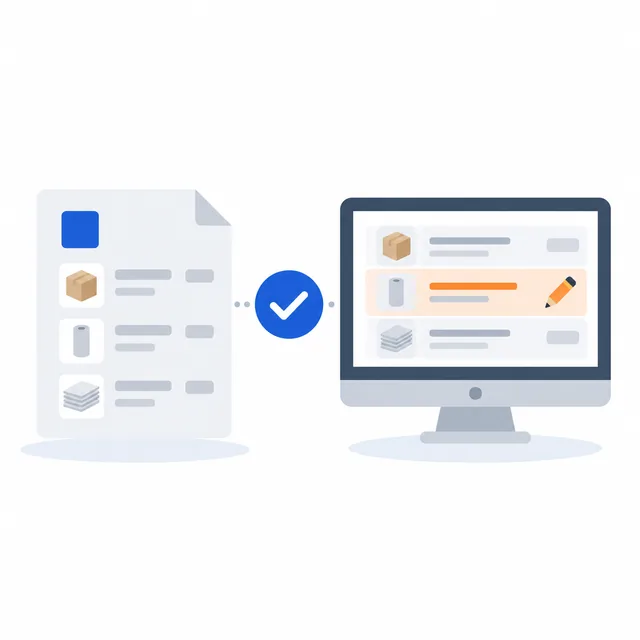
Take the example that comes up most often, because it is the one where AI saves the most typing: reading a supplier invoice.
A goods receipt used to mean somebody sitting with the hardcopy and keying in the supplier, thirty or forty line items, quantities, rates, discounts, tax and the total. It takes twenty minutes, it is dull, and it is where a surprising number of stock errors are born. A language model can read that same document in a few seconds and hand back a structured list.
Here is the fork in the road. There are two ways to build that feature.
The first way lets the model read the document and write the purchase directly into the database. It is impressive in a demo. It is also over-trusting the AI, and it is the design the sceptics are rightly worried about. If the model reads "Sri Lakshmi Traders" and picks "Sri Lakshmi Agencies" from your supplier list, or matches "Dettol 200 ml" to the 250 ml pack because both were in the catalogue, the mistake is already in your stock, your payables and your GST input before anyone has looked at it. Finding it a month later, during a stock count, is expensive.
The second way puts a review screen between the model and the database. The AI does the reading; a person does the accepting. The software shows, side by side, what the hardcopy said and what the system has matched it to: the supplier it picked, each item it recognised, the quantity, the rate, and where it was unsure. Anything it could not match confidently is flagged, not guessed. The user checks the supplier, glances down the lines, corrects the one it got wrong, and commits.
The saving is still almost the whole twenty minutes. The risk is almost entirely gone. This is how supplier-invoice scanning works in Stock2Track, and it is not a compromise we made reluctantly. It is the right design.
The three guards

The review screen is one instance of a general pattern. Every place AI touches business data in Stock2Track sits behind the same three guards.
1. Rules the owner defines
The owner decides in advance what the AI may do without asking. A reorder suggestion below a certain value, for a supplier already on the approved list, for items with a clear match, may go straight to a draft purchase order. Anything above that value, a new supplier, an unusual quantity, a price that differs from the last purchase by more than a set percentage, stops and waits. The rules are ordinary business rules, written in plain terms, and the AI works inside them rather than around them.
2. Approvals at the right level
Not every decision belongs to the owner, and not every decision belongs to the person at the counter. A scanned invoice can be reviewed by the store-in-charge; a purchase order above a threshold goes to the owner's phone for a single tap; a price change suggested for a whole category might need both. The point is that a human signs, and the software knows which human. AI proposes; people dispose.
3. An audit log you can actually read
Every suggestion the AI makes, whether accepted, corrected or rejected, is recorded: what it read, what it proposed, who reviewed it, what was changed and when. This matters for two reasons. First, when something does go wrong, you can see exactly where, instead of arguing about it. Second, the log is how trust is earned. When the owner can see that the last two hundred invoice scans needed a correction on four lines, the decision to widen the rules is based on evidence, not on a salesman's confidence.
The same pattern, everywhere AI appears
Once you see the pattern, you see it in every AI feature worth having.
Reorder suggestions. Stock2Track watches sales velocity, current stock and supplier lead time and drafts a purchase order. It does not send it. The owner sees the suggestion, the reasoning behind it and the amount, and approves from the phone or edits it first. A festival week that the model could not have known about is a thirty-second correction, not a warehouse full of the wrong stock.
Alerts with reasons. When margin on a category falls, the system does not just raise a flag. It explains what it found: the cost price of two items rose in the last purchase, or discounting on one counter went up. The owner judges whether the explanation holds. An alert that cannot explain itself is a guess dressed as a fact.
Follow-ups and messages. A drafted WhatsApp reminder to a customer with an overdue balance is useful. A reminder sent automatically to the wrong customer, or with the wrong amount, is a relationship damaged. So drafts are reviewed, at least until the rules have proved themselves.
In each case the AI does the part it is good at: reading, matching, noticing, drafting, explaining. The system does the part it is good at: arithmetic, rules, permissions, records. And a person does the part only a person should do: deciding.
Where AI is not needed at all
Guided also means knowing when not to use it. Today's sales, closing stock, who owes what, which items expire this month: these are exact questions with exact answers, and ordinary software already produces them correctly and instantly. Sending them through a language model adds cost and a small chance of error for no benefit. We wrote about that side of the question separately in Somebody is paying for every AI question.
Use AI where intelligence is required: reading a document, spotting a pattern across branches, explaining a change, turning a plain-language question into a query. Leave the rest to the engine that already knows the answer.
Trust is a dial, not a switch
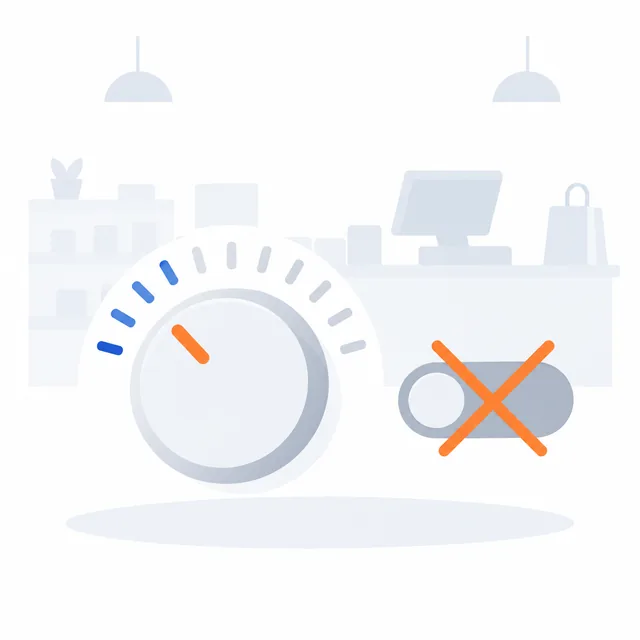
The vendors warning you off AI are treating trust as a switch: either the software runs unsupervised or it should not run at all. Nobody runs a business that way. Trust is a dial. A new employee starts on a tight rein and earns room over months. AI in your ERP should be the same.
Start with the review screen on everything. Watch the audit log. When the invoice scans come through clean for a quarter, let matched lines from known suppliers pass with a lighter check. When the reorder drafts prove sensible, raise the value that needs your tap. If something slips, turn the dial back. The controls are yours, and they stay yours.
That is what "guided" means in practice, and it is how Stock2Track is built: AI does the work, rules set the boundaries, people approve, and the log keeps everyone honest. The technology is too useful to leave on the shelf because it is imperfect. Everything useful in a shop is imperfect. The job is to put the right controls around it, and get on with reaping the benefit.